Christmas Snowman Cross Stitch Pattern Review
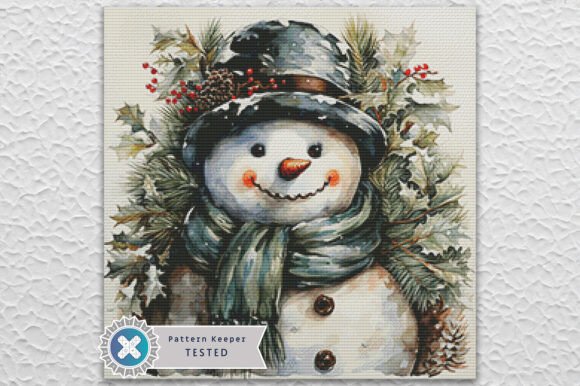
As an embroidery designer who has spent years translating digital concepts into tangible, stitched assets for small businesses, I approach every new design file with a mix of creative enthusiasm and commercial skepticism. The market is saturated with generic holiday motifs, so finding a piece that balances aesthetic charm with production viability is rare. Today, I am reviewing the Christmas Snowman Cross Stitch Pattern, a design marketed as full coverage for advanced stitchers. My goal here is to evaluate this asset not just as a craft project, but as a potential component for branded merchandise, embroidered patches, uniforms, and high-value handmade products.
First Impressions: Visual Personality and Brand Alignment
The title alone suggests a specific vibe: rustic, nostalgic, and deeply traditional. For a small business owner in the bakery, boutique, or café sector, this visual personality is gold. It evokes warmth and community, which are critical emotions during the holiday shopping season. Unlike modern, minimalist logos that can feel cold, a cross-stitch style snowman brings a "handmade" texture to digital files. This is crucial for brands trying to compete with mass-produced goods by emphasizing artisanal quality.
However, we must look past the charm. From a design review perspective, the "full coverage" description indicates a dense, solid block of color. While visually striking on a hoop, density translates directly to stitching time and material cost. For a brand identity focused on premium pricing, this density can signal luxury; for a high-volume promo item, it might signal inefficiency. The design feels playful yet classic, making it versatile enough for a florist’s holiday card packaging or a pet brand’s seasonal collar tag, provided the execution is precise.
Real-World Business Applications
Let’s discuss where this Christmas Snowman Cross Stitch Pattern actually performs in the real world. In my experience, cross-stitch aesthetics translate exceptionally well to specific categories of small business merch.
- Embroidered Patches: This is perhaps the strongest use case. The square, grid-based nature of cross-stitch creates a distinct border and structure that holds up well when cut out and edged. A 4x4 inch patch featuring this snowman on a tote bag or denim jacket instantly elevates the perceived value of the item.
- Apron Embroidery: For bakeries, coffee shops, or craft studios, staff uniforms are walking billboards. Placing this design on the chest pocket or center bib of a white canvas apron offers a friendly, welcoming touch. It humanizes the brand, suggesting that the people behind the counter care about details.
- Caps and Headwear: Cap embroidery often struggles with complex shapes, but a central snowman motif works well if scaled correctly. It serves as a focal point without overwhelming the curvature of the hat.
- Tote Bag Design: Canvas totes are the backbone of Etsy seller branding. A centered, large-scale application of this pattern turns a simple bag into a statement piece. Customers will carry your brand into public spaces, increasing organic reach.
- Product Packaging Accents: Smaller applications, such as a label sewn onto a gift box or a hangtag for jewelry, can add a tactile element that customers appreciate. It bridges the gap between digital ordering and physical unboxing.
Where Caution Is Required
Not every application is suitable. As a professional, I advise against using this Christmas Snowman Cross Stitch Pattern in scenarios where fine detail is lost. If you attempt to reduce this design to a tiny size for a sleeve cuff or a small button, the intricate thread colors and outlines will merge into a muddy blob. The "advanced stitcher" designation implies complexity that does not scale down well.
Furthermore, consider the fabric texture. Cross-stitch relies on a visible weave. On smooth, slippery fabrics like satin or certain synthetic blends, the stitches may pucker or fail to hold their shape. Dark uniforms can also be problematic; unless you use high-contrast white or bright threads, the snowman may disappear into the background. Finally, items requiring frequent industrial washing need robust stabilization. Without proper backing, the heavy stitch count could cause distortion over time.
Impact on Brand Identity and Customer Trust
In the current marketplace, consumers are increasingly drawn to authenticity. Using a design that mimics handcrafted techniques, even if produced via machine, taps into the desire for connection. When a customer sees the Christmas Snowman Cross Stitch Pattern on your product, they perceive effort. They see that you didn’t just slap on a generic clip-art logo. This perception builds trust and reinforces a professional image.
This design supports a narrative of tradition and care. For a local business, this is invaluable. It aligns your brand with values of craftsmanship and attention to detail. When executed correctly, it increases the perceived value of your finished product, allowing for higher price points on custom apparel and gifts. It transforms a commodity into a keepsake.
Practical Designer Notes for Production
Before committing to a production run, there are several technical steps every designer and business owner should take. Do not skip these checks.
- Test in Black and White: First, view the design in grayscale. This helps you assess the contrast and balance of the shapes without being distracted by the specific thread colors. If the silhouette isn’t clear in black and white, it won’t work in color.
- Check Scale and Hoop Size: The description notes finished dimensions of approximately 17.9 inches on 14-count fabric. This is a large design. Ensure your embroidery machine’s hoop size can accommodate the full width, or plan for multi-hooping. Multi-hooping introduces registration risks; ensure your digitizer has accounted for accurate alignment.
- Review Thread Color Contrast: With 100 DMC colors, the palette is likely rich. However, verify that light threads stand out against dark fabrics. You may need to adjust the thread list for specific garment colors to maintain visibility.
- Stabilizer Selection: Due to the high stitch count, a sturdy cut-away stabilizer is non-negotiable. Wash-away backing might not provide enough support for such a dense area, leading to fabric puckering.
- Create a Printable Mockup: Before stitching, create a printable mockup on the actual fabric type. This allows you to visualize the final look and get client approval without wasting expensive materials.
- Confirm Commercial Licensing: Most importantly, verify the license terms. Does the purchase allow for commercial embroidery? Can you sell unlimited quantities of the finished goods? Never assume rights; always check the design assets documentation.
Final Verdict
The Christmas Snowman Cross Stitch Pattern is a powerful tool for brands looking to inject warmth and artisanal charm into their holiday offerings. It excels in medium-to-large applications like patches, aprons, and totes, where its detailed nature can shine. However, it requires careful planning regarding scale, fabric choice, and licensing.
For the savvy small business owner, this design is more than just a cute snowman; it is a strategic asset that enhances brand identity and drives engagement. By treating it with the respect due to a professional embroidery file—testing, mocking up, and verifying licenses—you can turn a simple digital graphic into a memorable, high-quality physical product that customers love.